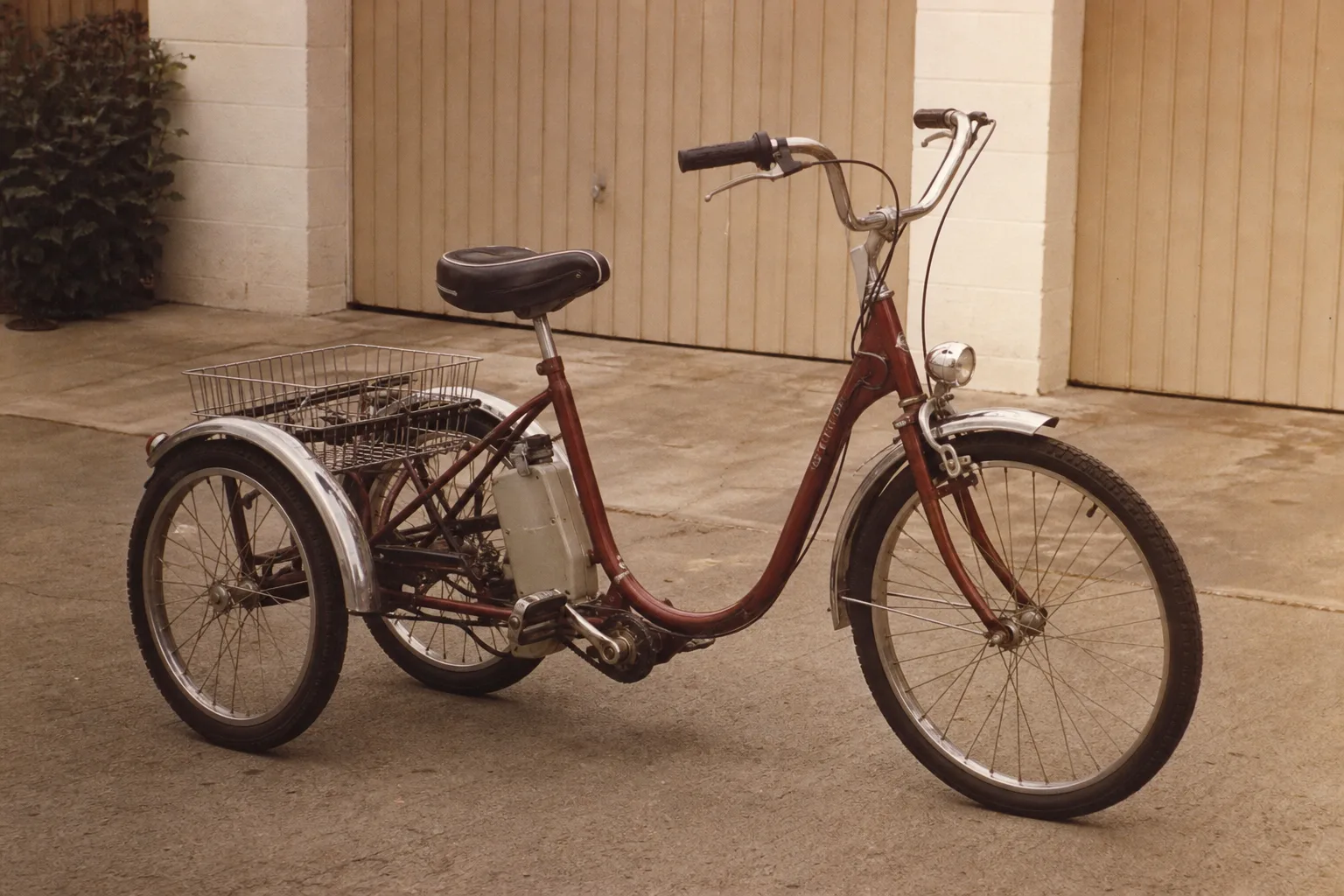
The decision to move from two wheels to three usually starts with one specific moment, repeated often enough to stop being funny: a foot that does not reach the ground fast enough at a stop sign, a bag of groceries that changes the handling of a bike that used to feel neutral, a knee or an inner ear that no longer negotiates the slow-speed wobble the way it did. A trike answers that moment directly and completely. It also introduces a set of problems that a two-wheeler never had, and those problems have prices attached, some in dollars and some in changed routes.
What the third wheel actually buys
The core purchase is standing still. A bicycle at zero miles per hour is an unstable object held up by a rider's continuous correction, and everything hard about riding at low speed follows from that fact. A trike removes it. You can stop at a light, stay seated, keep both feet on the pedals, look around, drink water, and start again without a dismount. For a rider with balance loss from an inner ear condition, a neurological diagnosis, a hip replacement, or simply age, that single change is often the difference between riding and not riding.
Cargo is the second purchase, and it is larger than most people expect. A rear basket on a delta trike, meaning one wheel in front and two behind, carries weight low and behind the rider without asking the frame to stay upright. Forty pounds of groceries in a rear box does not change the steering feel the way twenty pounds in a two-wheeler's panniers does. Riders who bought a trike for balance frequently report that the cargo capacity is what they end up using every week, and that the errand radius of their household changed as a result.
The three places it gets harder
Width comes first. A typical adult trike measures somewhere between thirty and thirty-four inches across the rear axle, which is wider than a lot of the infrastructure built for bicycles. Bollards on rail trails, staggered gates at park entrances, the pinch point where a sidewalk narrows around a utility pole, and the sixty-inch bike lane that has a parked car edging into it all become route questions rather than non-events. This does not stop you riding. It means the route you know by heart has to be walked or ridden once with a tape measure in mind before you commit.
Curb cuts come second, and they are the surprise. A two-wheeler crosses a driveway apron or a ramped curb at an angle and absorbs the transition with one contact patch at a time. A trike puts two wheels across that ramp simultaneously, at different heights, and the frame twists to accommodate it. On a tadpole layout, two wheels in front and one behind, you feel the same effect through the steering. The fix is approach angle and speed, learned over a few weeks, and it costs nothing but attention.
Side slopes are the third and the most physical. Sidewalks are graded to drain toward the street, usually at around two percent, and a crowned road sheds water the same way. A bicycle handles that by leaning imperceptibly. A trike cannot lean, so the cross slope loads the downhill wheel, pulls the steering, and asks the rider to hold a correction the whole time. On a long stretch of off-camber path, that becomes tiring in a way no one warns you about. Riders solve it by choosing the flatter side of the road, by riding in the traffic lane where the crown is shallowest, and by trading a scenic sidewalk route for a boring flat one.
What the trade costs in money
Three wheels means three tires, three tubes, and on most models three brakes, so consumables run higher than a comparable two-wheeler by a predictable margin rather than a shocking one. The larger costs are structural. Storage has to accommodate a machine that cannot lean against a wall, which sometimes means giving up a parking bay or building a shed pad. Transport requires a hitch platform rated for the weight, not the trunk rack in the garage. Adding motor assist raises the entry price substantially, and buying an electric 3 wheel bike also brings a battery on a replacement schedule measured in years, not decades.
There is a service cost too. Many bike shops will happily fix a trike's drivetrain and decline its differential or its rear axle assembly, because the parts are model-specific and the workstand does not fit. Ask before you buy, by name, at the shop you actually use. The Consumer Product Safety Commission oversees safety requirements for bicycles sold in the United States, including multi-wheeled adult models, and a dealer who can speak clearly about which standards a frame is built to is usually the same dealer who stocks its spares.
Deciding which side you are on
The honest test is to count your moments. If the low-speed instability, the stops, the loads, and the dismounts are what keep you off the bike, three wheels removes those completely and the width and camber problems are route planning, which is solvable. If your riding is mostly fast, mostly narrow singletrack or crowded sidewalk, and mostly on crowned roads, the trade runs the other way and a low step-through two-wheeler may serve you better for less money.
Most people who make the switch describe the first month as a rebuild of their mental map: the same neighborhood, re-surveyed for width and slope, with two or three streets quietly retired and two or three added. After that the machine stops being a compromise and becomes the bike, which is the point.