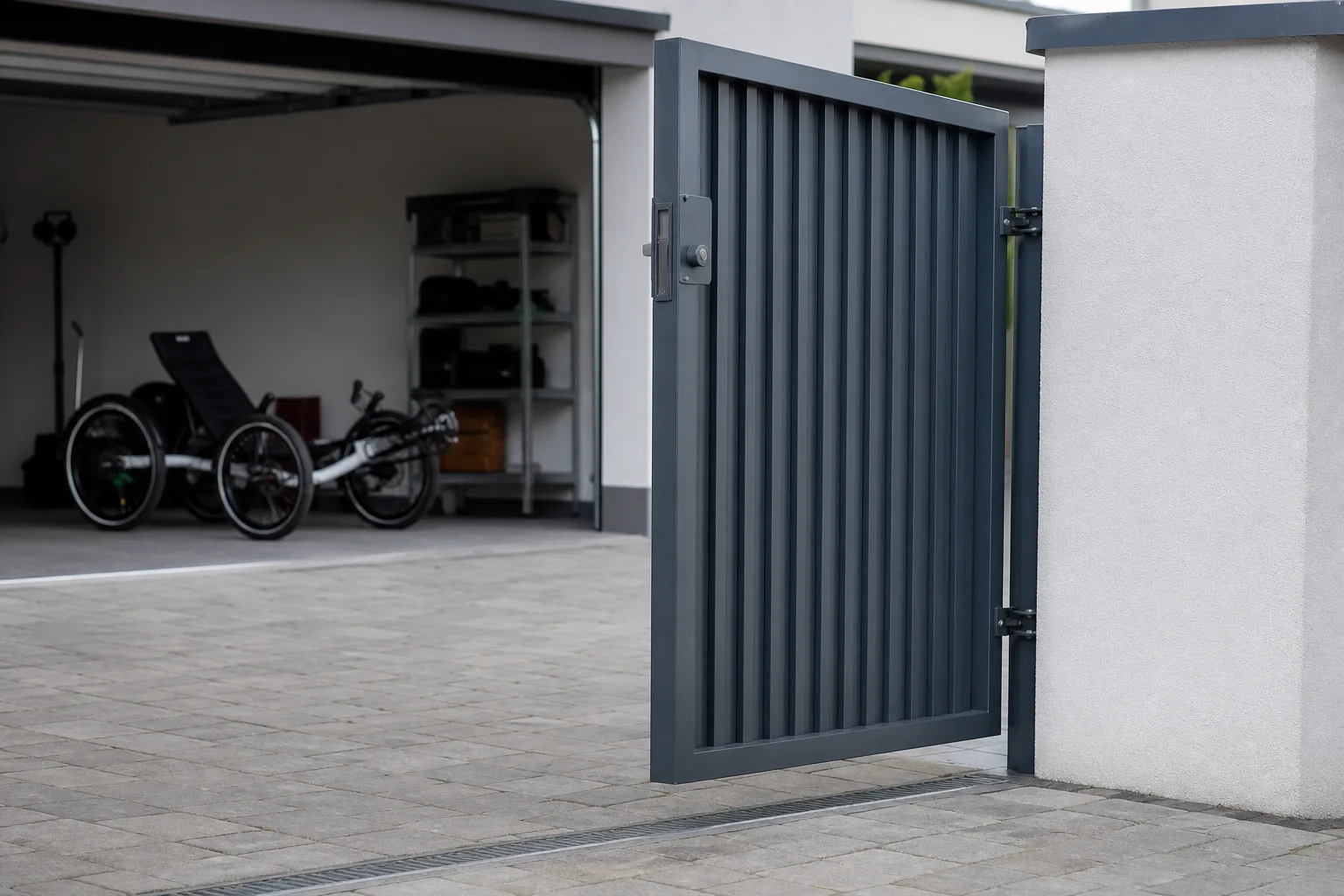
The riding decision and the storage decision are separate problems, and the second one is the one that sends trikes to the classifieds after six months. A recumbent tadpole that carves a parking lot beautifully may still refuse to pass the gate between the house and the yard, and an upright delta with a big rear basket may fit the gate and then refuse to turn once it is inside. Both outcomes are predictable with a tape measure and half an hour. What follows is the order a careful buyer works through, starting at the narrowest point on the route home.
1. Measure the widest part, not the advertised width
Published width figures are inconsistent, and some are taken at the axle rather than at whatever actually sticks out furthest. On a tadpole, that is usually the outer edge of the front fenders or the tire sidewalls at full bulge, not the hub faces. On a delta, it can be the rear basket, the mirror stalk, or a pannier you have not bought yet. Measure the demo bike yourself, at the ground and at handlebar height, then add an inch for the fact that nobody threads a gate perfectly straight while walking backward.
2. Find the true clear opening of every gate and door
A gate advertised as thirty-six inches is a thirty-six-inch frame, and the clear opening between the stops, with the gate swung fully back against its hinge hardware, is often two to four inches less. Measure the clear opening at ankle height, since latches, kick plates and settled posts all narrow the bottom. Then walk the whole route: gate, side path, shed door, threshold, garage service door. The narrowest point on that route is your real width limit, and every trike you consider has to clear it with room to steer.
3. Test the turning circle in the space you actually have
Turning circle matters most inside storage, not on the road. A trike that needs a fifteen-foot circle to turn around will need to be lifted, dragged, or reversed the length of a narrow shed instead. Ask the dealer to let you turn the machine in a marked-off rectangle the size of your garage bay or yard path. Note whether it can be steered while walking beside it, and whether the handlebars foul the frame at full lock, because that determines whether you can back it into a corner alone.
4. Check ramp slope in inches of rise per foot of run
Thresholds, shed lips and curb cuts all need a ramp, and the useful number is rise divided by run. A six-inch step with a three-foot ramp is steep enough that an eighty-pound trike with a battery will want to run away from you on the way down. A twelve-to-one slope, meaning a foot of ramp for every inch of rise, is comfortable to push loaded. Also check the ramp's width against the trike's track, and whether the transition at the top is flat enough that the frame does not ground out.
5. Time the folding claim against your own doorway
Folded dimensions in a spec sheet are achieved with the seat removed, the battery out and the pedals off. Ask to fold the machine yourself, timed, with no help, and then measure the folded package in all three directions. Compare that to the door it has to pass through and the floor space it has to occupy. A fold that takes four minutes and two tools will not happen twice a day. A fold that takes forty seconds and drops the width by ten inches genuinely changes what storage is possible.
6. Match the rack to the weight, not to the wheels
Most trunk and roof racks are out at eighty pounds and up. What works is a hitch-mounted platform rack rated for the actual loaded weight, on a receiver rated for the tongue weight it will carry, usually a Class II or Class III. Confirm the platform's usable length against the trike's wheelbase, confirm the tray spacing against the front track, and confirm the tie-down points sit where the frame is strong. The Consumer Product Safety Commission oversees safety requirements for bicycles sold in the United States, and reputable rack makers publish their own load ratings clearly.
7. Plan the lift before you need it
Removing the battery takes ten to fifteen pounds off in seconds, and taking off the seat or a rear rack takes off more. A folding aluminum ramp lets one person walk the trike up onto a low platform rack rather than lifting it. Decide now which parts come off, where they travel, and whether a second person is required, because a rack that only works with help is a rack that limits where you ride.
Take the tape measure to the dealer, write the numbers on your phone, and compare them against the gate before you put money down. The trike that fits your storage gets ridden.